
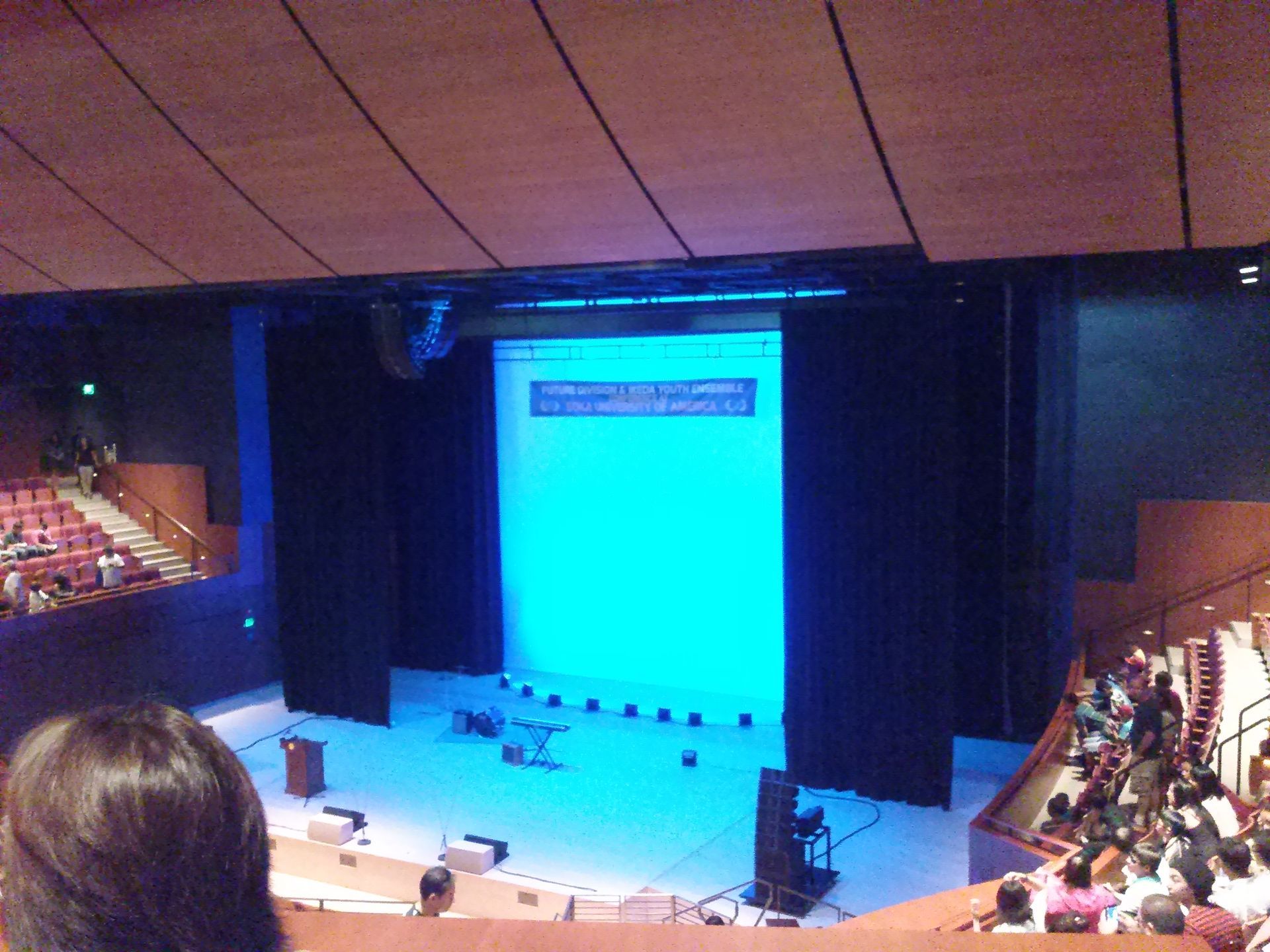
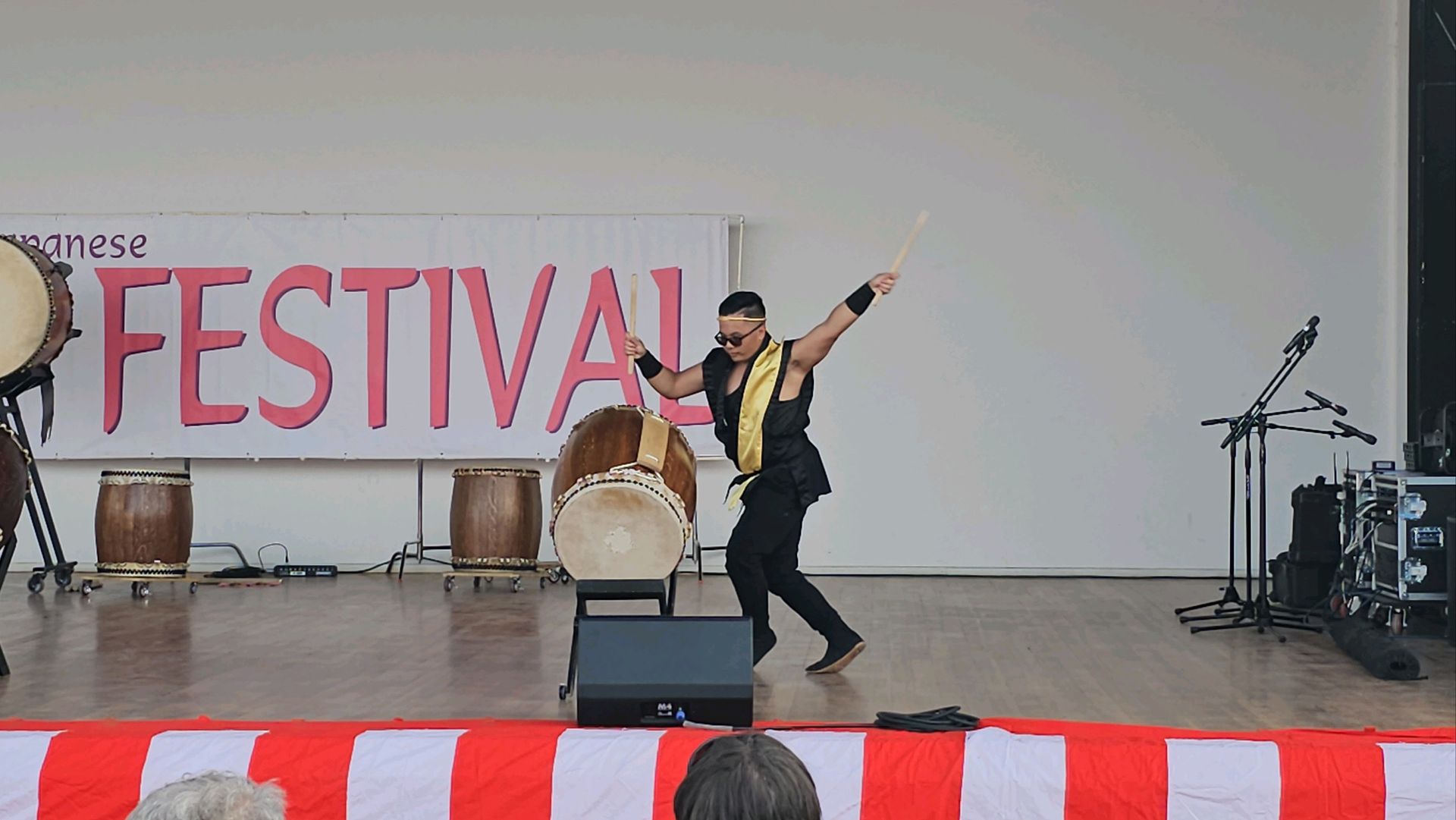
Stepping Back For a Moment Rewinding the clock just a bit to tell this next part of the story. In 2015, through the Buddhist temple, I was invited to be a part of a performance in California as a dancer. I learned that we were performing for a delegation (AKA super important temple person) that would be visiting 3 cities in the United States for the first time and that only top-leaders in the Buddhist temple in the United States would be a part of these meetings. I know 2 of the cities the delegation would be visiting would be Los Angeles, CA and New York, but I don’t recall the third city (Perhaps it was Chicago?) I was honored to be a part of this performance and it was honestly one of the most exciting times I spent with the Buddhist temple. Was it a perfect experience? Absolutely not, but it was definitely memorable and made a lot of good friends. Fast forward to 2016. I was having a meeting one evening with members of the Buddhist temple and a visiting higher-up leader from California. They told me something along the lines of they heard someone had asked that visiting delegation from 2015 what they thought of the United States. The delegation had said, “All I could remember was New York.” Somehow, this pissed off the people from Los Angeles and the other city. As a result, the Buddhist temple now planned on having a huge youth-only meeting and would want to hold a gigantic meeting in 2018 to show how “great” the entire Buddhist temple was. This would mean having a huge performance-type production sometime in 2018 across 3 cities (later changed to 9 cities). Returning to 2017 when I chose to join the dance group over the taiko group. I would learn this choice would serve as a fraction of the vetting process to get people into the performance groups for the gigantic performance that would take place in 2018. Later that year, there would be more formal interviews and official auditions to be a performer for that gigantic 2018 performance, but I noticed that a lot of the better performers that stuck with the groups in 2017 ended up being the same performers for the 2018 performance. When the time came calling for auditions for the big 2018 performance, I decided to audition to be in the dance group. I passed the audition and became the only dancer from Las Vegas to be a part of the dance group in the huge performance that would be hosted in California. The higher-up leaders “encouraged” everyone to have “laser-focus” for the big 2018 meeting, which kind of did happen for many people. As a result, I did not play taiko at all, or very much, during the entirety of 2018. Disorganized Organization, Making Lucky Choices I am somewhat thankful that I joined the dance group versus the taiko group for the big 2018 meeting. The dance group seemed a lot more organized. We had the majority of our material ready to be taught to us, and the leaders for the dance group were actual professional dancers who were active in the dance industry. From what I heard through the grapevine, I honestly could not say the same for the taiko group. I learned that once the taiko performers made it to their first rehearsal for the big 2018 meeting, the song that was specifically written for the taiko group wasn’t even finished. I believe they only had half the material needed for a full-fledged performance. Learning this information didn’t sway me from taiko as a whole like before, but I was definitely thankful I didn’t have to deal with those problems. I didn’t learn the taiko piece, but when I saw it, I wasn’t very impressed. It was written in Western notation, which is fine, but the time signature was 8/8, which was rare for me to see. Usually I see 4/4, 3/4, or 6/8, but why would you write it in 8/8? It made no sense to me, but I’m glad I didn’t have to deal with that. Another thing I didn’t really care for was the Western feel of the song. It sounded more like a drumming march than a taiko song. Usually taiko songs have a lot more “ma” (air) between notes. There was just a machine gun sequence after machine gun sequence of notes. Not much breathing space nor contrast between sections. Almost everything was loud, loud, loud. I also had a chance to listen to some of the “encouragement” that the taiko “leaders” gave to the other taiko performers. They said something along the lines of, “We’re gonna be STRONG, we’re gonna be POWERFUL, FIERCE!” Those things alone on paper are fine, but I didn’t really feel those once I saw the performance the day of the performance. Perhaps they should have encouraged people to be “On Rhythm and In-time.” I later learned that many taiko performers who partook in the big 2018 performance didn’t pursue taiko within the temple after the big meeting. This was crazy to me since everyone spent nearly a year learning their materials just to quit once of the big performance finished. Even the leaders who were appointed across the US to lead and teach the taiko groups did not practice taiko consistently afterwards. 2019: Wide Staircase Progress Again During the preparation of that big performance meeting in 2018, we ended up suspending all local rehearsals at our home Buddhist temple in order to participate in rehearsals for the big 2018 meeting. That meant if someone was part of the performance groups locally but did not end up being a part of the big 2018 meeting, they were out of luck if they wanted to rehearse with anyone in the temple. So after the big 2018 meeting, going back and holding rehearsals was similar to going back to square one since we had to round up new people: many people did not come back from the initial groups we had performed unless they actually got to perform in the big meeting. Around late 2018, after the big 2018 meeting, I played taiko a little bit now and again. I think I had a performance at a wedding and one small showcase at the Buddhist temple’s retreat center in Florida. It was nice playing taiko again, even for a little bit. I don’t think I progressed much as a taiko performer but I feel that was more by choice. I was working more with the Buddhist temple’s dance group and I was happy to have a small group again. I don’t recall playing taiko much in 2019. Maybe through the Buddhist temple, I played for 1 meeting for leaders and another meeting for a block party, but that’s all I could recall. 2020: Pandemic Kicking Off My 2-year Hiatus I stopped all taiko activity late 2019 to focus back on the dance group. At that point, R. K. had taken charge of the taiko group and would occasionally invite me to perform. I didn’t practice as much but was still familiar. In March 2020, quarantining started and I stopped any activity with taiko, dance, and the Buddhist temple. I did have lots of practice equipment, such as drum pads and different sized bachi, but I did have the urge to do so since I had gotten laid off and I had to find a job. After I got laid off from my job, I tried so hard finding a job online through applying my ass off to multiple listings, but I legitimately got nothing. No More Temple Taiko By March 2020, I was at my wit’s end with the Buddhist temple. Without going into much detail (as this can become a very, very long blog post) I was not happy with how things were run in the Buddhist temple and I decided to say some things about them online. In short, there was a lot of manipulation, coercion, and inappropriate usage of peoples’ social capital. I decided to post information online on how I had been slighted by the Buddhist temple and gave a very negative review about them. I thought I was doing this anonymously, but I was leaving breadcrumbs here and there to leave clues that it was indeed me. The Buddhist temple found out I was exposing the truth about them and excommunicated me from the temple. Sucks for them! There were only 3-4 consistent taiko performers, and I know for a fact that none of them, not even R. K., would be able to spearhead the taiko group due to personal responsibilities. They would end up selling their taikos in 2024 or 2025, speculatively due to no one being able to consistently practice nor perform on them. Yep, Definitely No More Taiko For Me For a While I thankfully did get a job by November 2020 but didn’t bother with dance nor taiko by that time. I don’t even think I told people that I played taiko but I definitely did tell people I was a b-boy/dancer. I don’t think I was comfortable with claiming that I was a “Japanese drummer”/taiko performer since I no longer had access to drums. I knew of the two groups in town as I had been to many Japanese festivals before and had seen them perform before. But I didn’t feel like joining them as I had a new job and actually wanted to try to get back into dancing.
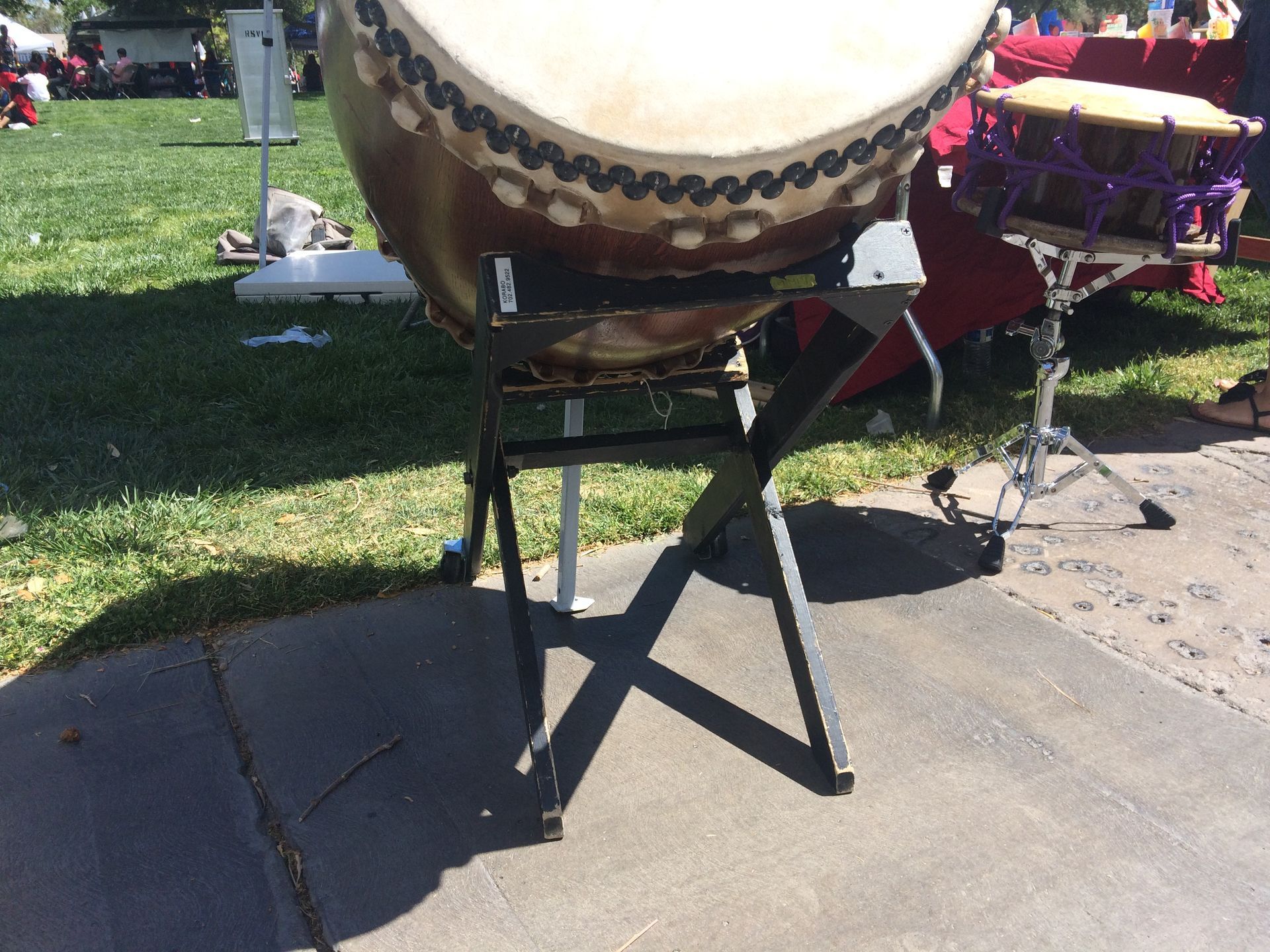
Time would pass since I learned what taiko was at that California competition. I realize now that I’m older that my opinion of an entire art form should not be dependent on the performances of one, single, less-than-amateur group at a Buddhist temple that anyone rarely goes to. But I was a lot less immature then, hence my warped view on taiko. I will say, it’s quite tough to create a deeper opinion on something when that thing (in this case, taiko) is badly represented to you on a weekly basis by bad leadership, less-than-stellar rehearsals, and an organization that tries to please everyone while disappointing everyone else at the same time. During my next 2 years as the leader of the performance groups, I did my best to support the temple’s taiko group as best as I could, helping them transport drums to and from a few performances, and if for some reason there was an event in California where they needed more taiko performers, I would extend the offer to the performers in Las Vegas. I still supported the dance group in addition to this, and the dance group would have performances as well. Picking up taiko bachi, finally 2016 would mark, I believe, the first time I picked up the taiko bachi (sticks). At one rehearsal, there was a young man, R. K., who decided to join the performers as a guest student. It wasn’t until R. K. came to the Buddhist temple that I finally saw what taiko could potentially be and what a real taiko player could become. It’s one thing to see someone on stage perform and think, “That’s amazing, I could never do that!” and it’s another thing when someone, during a rehearsal, does something amazing 3 feet away from you and think, “These talented, amazing performers are normal people just like you and me!” At the very first practice I saw R. K. attend, I saw him do some awesome solo taiko choreography, and he totally just blew everyone else out of the water! It was a huge breath of fresh air to witness good taiko live and up close . For once, I actually had hope for the first time in a long time that the taiko group could actually become something decent . R. K. would leave for several months due to personal reasons. He then came back and moved back to Las Vegas, would support the temple’s taiko group, and later became the taiko group leader. But it would be some time until the leadership transition happened. I was thankful when he finally started supporting the taiko group. It was not until R. K. started teaching the other students that I even considered trying taiko. I believe the very first time I tried to play taiko was in the parking lot of the Buddhist temple. It was the end of practice for all the performance groups, and before they put the drums away, R. K. had offered to let me try to play the drums. I recalled seeing R. K. doing an arm-crossover pattern several weeks prior, similar to a basic Filipino Eskrima pattern. I tried doing the same pattern, and I found it a little fun! One day, when none of my dancers could show up for rehearsal, I decided to join the taiko group for a practice session. From that point on and for a few months in 2016, I did learn a lot of the basics of taiko and played a couple of basic, yet engaging, original song pieces for the Buddhist temple with R. K. and the taiko members that still stuck around. Previous performance experience coming in clutch When I started playing taiko, I already had a background that I knew would help me progress as a performer. At the time, I already had about 7-8 years of dance experience at that point (at an amateur level, however), and I had a small musical background. My dancing background gave me an edge since I could incorporate choreography ideas into my taiko performances. I could also think in a “creative” manner regarding how to create new movements in my taiko solos. The aspect of “biting” in Bboying culture also crossed my mind, which meant I should try to make as many original moves as I could so no one could say I was copying anyone else. In addition to my dance experience, I did indeed have musical experience. I learned how to play the violin since I used to play for less than a year when I was 8 or 9, and I had 3 years of experience playing the tuba in middle school. Thanks to those encounters with instruments, I had a basic understanding of rhythm and some music theory, so learning timing and when to strike the drum wasn’t an issue. A bonus that would come in handy later would be my pen spinning experience. I learned how to “pen spin” in middle school, so that definitely carried over when it came to learning how to twirl bachi for some choreography and to do some tricks. Knowing how to transfer momentum from your fingers to a prop is generally not easy to do, but for someone with years of experience, it only takes a few minutes to learn certain maneuvers. Practicing taiko for progression, slowly but surely I consider R. K. my very first taiko teacher, even though I never called him “Sensei”. He was an amazing teacher to me: he had been playing taiko since he was 4 years old (we were about the same age when we met), he was very easy to work with, and always tried to make the group the best group we could possibly be. We would write our own songs, many of which had opportunities for us to solo, and show everyone at the Buddhist temple what we can do when taiko actually looks good . After 3 months of learning taiko and practicing, I actually surpassed the incompetent “leader” in skill despite that leader having played taiko for about 3 years at that point. Prior to my first performance together with the incompetent leader, they also admitted to me that I had surpassed them. To this day, I’m not sure if it’s because I was that good at learning taiko, or that “leader” was just that bad . I’m thinking more of the latter at this point. I believe R. K. allowed me to borrow some of his bachi until I got my own. My first pair of taiko bachi were a pair of really cheap Vater sticks from Amazon, which splintered within a few weeks. I later upgraded to some Asano bachi. I practiced in front of a mirror when I had the chance (I had a mirror at home, but not at the Buddhist temple), and sometimes would even stay after practice for hours just to practice on the drums some more (I had a key to the Buddhist temple at that point due to climbing up in leadership, which is a completely different story). Taiko was definitely a different art form, but I could find myself practicing and rehearsing for many hours at a time. Taiko was very engaging and freakin’ fun once I got my feet wet. Starting to Perform My first performance was doing some easy beats, transitioning to switching solos with the former “leader” I didn’t like: it was just the 2 of us. In my first performance, I dropped one of my bachi, but thankfully, I had a spare one to pick up near my feet. In my opinion, for someone who just started playing 3 months ago, I think I was doing just fine. Do I cringe at that performance every time I watch it? Absolutely . But I’d like to think I cringe because I’m so much better as a performer now. With taiko, I loved having the opportunity to solo, but performing as a group was just as nice. As a dancer, I loved having the spotlight on me, but playing together as a group was a great demonstration of coordination and teamwork . I played taiko “on and off” until about 2019-2020. I do not recall at all when my last performance was with the Buddhist temple. I never really went full-out with the temple’s taiko group. After all, I was originally part of the temple’s dance group, which was always my first priority. But as people would come and go out of every group, I was thankful that I could gravitate back to taiko when I had the opportunity to do so and when they had a necessity for me to join. Old Leader Out, In With the New R. K., his girlfriend (at the time), and I were a solid trio of performers and could create songs thanks to R. K.’s teaching methods and have super-focused practice. R. K. would eventually be appointed as the taiko group leader. He wasn’t comfortable with the title at first, but it was only fitting since he was already leading the group in terms of direction, creativity, choreography, and skills. As R. K. continued to work with the taiko group, some members fell off. And I’m happy to say that the incompetent “leader” that I disliked so much also fell off of taiko. I’m not sure exactly when they fell off as a performer, but I do recall massive amounts of drama happening between this “leader” and the organization, and the “leader” disappeared from the Buddhist temple completely at one point. With the Buddhist temple, I had the opportunity to perform at many places around the Las Vegas valley. The Buddhist temple did a lot of Interfaith work with the Southern Nevada Interfaith Council, so we were really well-connected with some other local religious organizations. One memorable client I could remember performing for would be the Anti-Defamation League (ADL). We performed for a charity run they hosted at the Springs Preserve and performed again for a Seder they held at one of their hosted temples in Henderson. I also had one opportunity to perform taiko on our temple’s float in the Las Vegas Pride parade, and I believe we even won an award that year for our parade entry. Another obscure but very memorable performance I recall as well was performing at a memorial for those who had passed from police violence: it was very somber, but I’m glad I could contribute somehow to the atmosphere. Although taiko was never my top priority , taiko definitely opened many doors for me and allowed me to learn another way to express my creativity. Unknowingly encountering Korabo Taiko through Rebel Taiko Experiment Sometime in 2017, R. K. had started going to University of Nevada Las Vegas (UNLV) and joined the collegiate group, Rebel Taiko Experiment (RTE). He mentioned this in passing during one of our rehearsals, but I put it in the back of my mind since I was going to College of Southern Nevada (CSN) and didn’t have any plans to go to UNLV as a student at the time. One weekend, we were invited to attend one of the Buddhist temple’s performances/meetings in California. The evening prior, we were planning on going to California together late that evening: R. K., his girlfriend (at the time), and I. R. K. and his girlfriend had taiko practice for RTE, and I decided to join him since I was going to be riding with them that evening anyway. The rehearsal was where I now know is the Korabo Taiko dojo on Desert Inn Road, but at the time, I just knew it was a taiko dojo, not necessarily knowing whose dojo it was or how long it had been in operation. There was a sign on the dojo, “Rau Tama Nui”, which is a Tahitian dance group that shared the space with the group. This explained the other types of drums in the dojo that looked completely different from taiko drums. During the one rehearsal I went to, I did spend most of my time watching the group rehearse, and towards the end of rehearsal, R. K. had offered me to play a solo on one of the taikos as he played the ji (base beat). I didn’t do anything crazy, but I did play to my heart’s content. That’s when I first met Grady Mayo from Korabo Taiko. He had asked me which group I played with, and I just said that R. K. was teaching me taiko. R. K. and I would have a long night since he was driving us to California that very same evening, but that’s another story. Choosing dance over taiko Fast forward about 10-12 hours. We finally made it to rehearsal in California the next morning. We slept over at R. K.’s parents’ house the previous evening and into the morning. The rehearsal that was being held was part recruitment, part rehearsal, part promotion/kick off for the performance groups in the Buddhist temple in half of Southern California. The meeting entailed a showcase from each of the group’s top performers and encouragement from the temple’s leaders. Right before it was time to split up to the group of our choosing, there was an offer to join any group that we wanted to learn more about, that group and even have a chance at performing with them. I was actually more impressed by the dance group’s showcase than I was with the taiko group’s showcase, so I chose to join the dance group that day over taiko. Looking back, I don’t regret choosing dance since doing so pushed me to the limits of who I was as a dancer, but I do often wonder what I could have accomplished if I had chosen the taiko group instead. This decision ended up turning into a 1.5+ year commitment to the group we chose that day. I did still play taiko on and off back in Las Vegas, but when it came to bigger performances that were taking place in California, I was part of the dance group 100%. Temporarily Splitting from the Trio Up until that point in time, R. K., his girlfriend, and I were a solid trio. People would still come and go in and out of the taiko group, and we had some very solid performances given the resources and time we were provided. The toughest thing to emphasize and pass on to performers, especially new ones, is consistency . It’s ok to be gung-ho at first if that’s what it takes for you to get behind the drum, but it’s continuing even when you don’t want to that separates the good players from the great ones. I was always grateful when someone new would join the taiko group, but it definitely takes adjusting when someone decides to try something else or leave taiko entirely. I don’t think much would be different from my taiko experience if I had chosen to pick taiko over dance in 2017. And although I did split from our Trio, because of my chemistry and prior dedication to the Las Vegas taiko group, I always felt that I could pick up where I left off as if I never split from the group in the first place.